Rethinking Concrete Dust Management: Challenging the Industry's Biggest Assumptions
What if some of the concrete grinding industry's most accepted truths about dust management are only half right?
Statements such as "if you can't see dust, you're fine" and "just buy an H-Class vacuum" are repeated so often that they've become industry shorthand. Yet neither reflects how dust behaves in real-world grinding and polishing conditions, where equipment, work methods and operator technique all influence dust generation and control.
At WORX+, one thing has become increasingly clear: cleaner air and safer worksites are rarely the result of a single product or piece of equipment. The best outcomes come from understanding how dust is generated, how exposure is measured, and how multiple controls work together as a complete system.
But before we discuss solutions, it's worth challenging some of the assumptions that continue to shape the industry's approach to dust management.
The Industry Confusion Around “Silica”
Silica is a naturally occurring mineral found in materials such as sand and stone. It exists in different forms, and not all of its forms present the same health risk. Crystalline silica, which is commonly found in construction materials such as concrete, is the form of concern because cutting, grinding or polishing these materials can release respirable crystalline silica (RCS) - extremely fine airborne particles that are small enough to penetrate deep into the lungs when inhaled.
The distinction matters because not all dust - and not all silica - is created equal. Larger airborne particles are often trapped by the body's natural defence mechanisms and are generally regarded as nuisance dust. Respirable crystalline silica (RCS) particles, however, are small enough to bypass these natural defences, penetrate deep into the lungs and contribute to serious, irreversible health conditions over time.
It's also important to remember that while visible dust is a warning sign that dust controls or housekeeping may need attention, it is not a reliable indicator of risk. The greatest health hazards often come from fine respirable crystalline silica particles that can remain airborne long after larger, visible dust has settled, meaning a worksite may appear relatively clean while hazardous respirable dust is still present.
Why H-Class Alone Isn't Enough
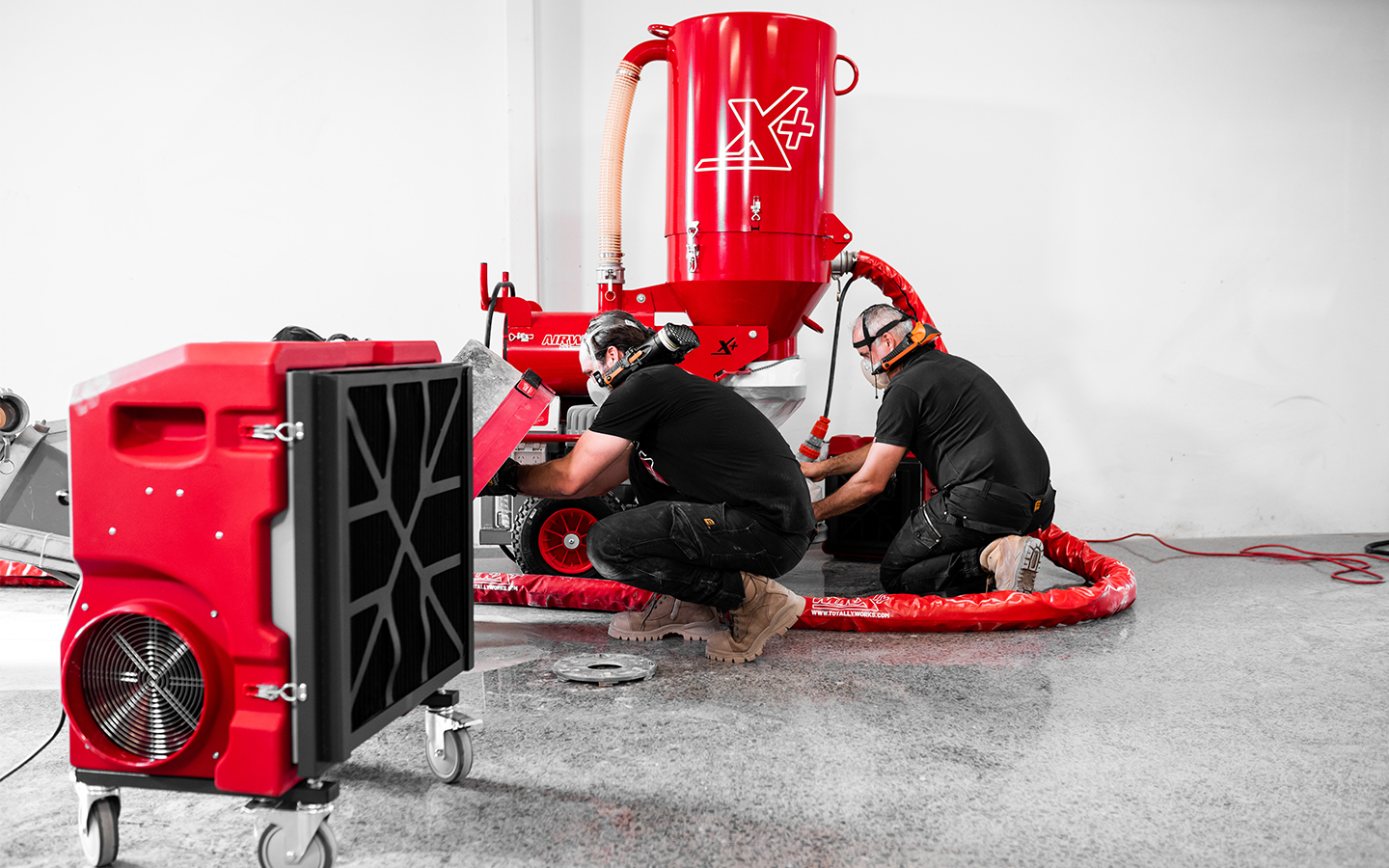
H-Class extraction systems have become synonymous with dust management in the concrete grinding industry, and rightly so. They remain an important engineering control and play a critical role in many applications.
However, owning an H-Class vacuum does not automatically guarantee clean air.
Dust extraction performance depends on a range of variables. Grinder configuration, tooling selection, dust containment, airflow, filtration condition, maintenance practices, operator technique and the surrounding environment all influence how effectively airborne dust is created and controlled.
Why does this matter? Because dust management is only as effective as the system supporting it. A high-performance extractor connected to a poorly configured grinder can still deliver poor outcomes. Equally, an H-Class extractor that isn't correctly matched or fit for purpose may fail to provide effective dust control, even when the grinder setup is otherwise sound.
This is not to suggest that H-Class systems are unnecessary. Rather, it highlights an important point: air quality outcomes are influenced by multiple variables. Different environments, materials, grinding methods and stages of the grinding and polishing process all create different dust profiles. Initial grinding typically generates larger, heavier particles, while later polishing stages produce much finer, lighter particles that behave very differently in the air. As a result, the risk profile is not static from start to finish. Effective dust management should therefore prioritise a layered, systems-based approach that adapts to changing conditions, rather than relying on any single control measure.
Why Air Sampling Matters
One of the most common misconceptions in dust management is that visible dust tells the whole story.
Yet, respirable crystalline silica particles are invisible to the naked eye and can remain airborne long after visible dust has settled. Conversely, a worksite can appear dusty without presenting significant respirable crystalline silica exposure, while hazardous respirable particles may still be present even when the environment appears relatively clean.
The only reliable way to determine airborne contaminant exposure is through professional air monitoring and sampling. Dust control measures are designed to reduce exposure, but their effectiveness should never be assumed. Nor does every task require every available control measure. The objective is to implement controls that are fit for purpose and confirm they are delivering the intended outcome.
Professional air sampling provides the evidence to do exactly that. It allows contractors to assess how their dust management systems are performing, identify opportunities for improvement and verify compliance with workplace exposure standards. A clean-looking site or the use of an H-Class extractor should not be taken as evidence that workplace exposure standards are being met. Rather than assuming controls are working, contractors can demonstrate that they are.
This not only supports better dust management decisions but also provides documented evidence that businesses can use to support their workplace health and safety obligations.
For businesses committed to improving safety outcomes, maintaining compliance and site performance, evidence remains the most valuable asset in effective dust management.
Why Equipment Alone Is Not the Answer
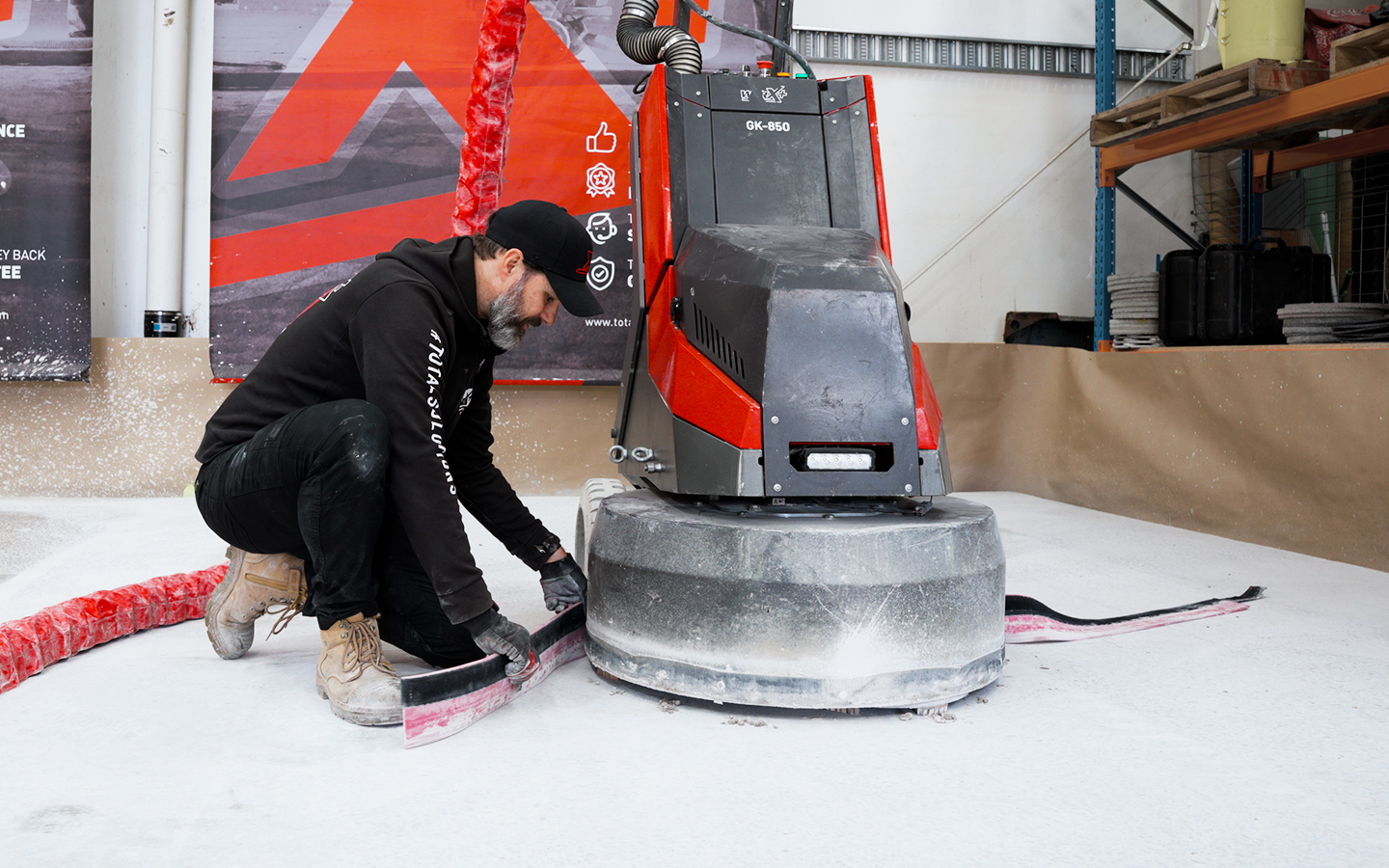
Some of the biggest improvements to dust management can come from getting the fundamentals right.
"We've seen sites where replacing a worn dust skirt or clearing a blocked filter delivered a bigger improvement than upgrading the extraction system itself," says WORX+ Director and Head of Sales Josh Van Der Veen.
It's a reminder that effective dust management is often influenced by the smaller details. Tooling selection, for example, can have a significant impact on both the volume and characteristics of dust generated during grinding. Dust skirts and shrouds help contain particles at the source before they have an opportunity to become airborne, while routine maintenance, including filter cleaning and inspection of hoses and seals, is essential to maintaining extraction performance.
Work methods are another important part of effective dust management because operator technique, machine setup and even site airflow all influence how effectively dust is captured and contained during grinding.
Good housekeeping also plays a valuable role in effective dust management. How dust is collected, transferred, bagged and cleaned up can determine whether fine particles are removed from the work area or simply reintroduced into the air. Something as simple as dry sweeping accumulated dust can undermine otherwise effective control measures by redistributing fine respirable particles back into the breathing zone.
The contractors achieving the best dust management outcomes understand this. They recognise that effective dust control is not simply about having the right equipment. It's about understanding how dust behaves, applying sound work methods and ensuring every part of the system is performing as intended.
Developing that understanding is how we continue raising standards across the industry. As an industry, we should be encouraging greater competency alongside better equipment, because the best dust management outcomes come from informed decisions made by skilled contractors, not simply better machines.
Building a Complete Dust Management System
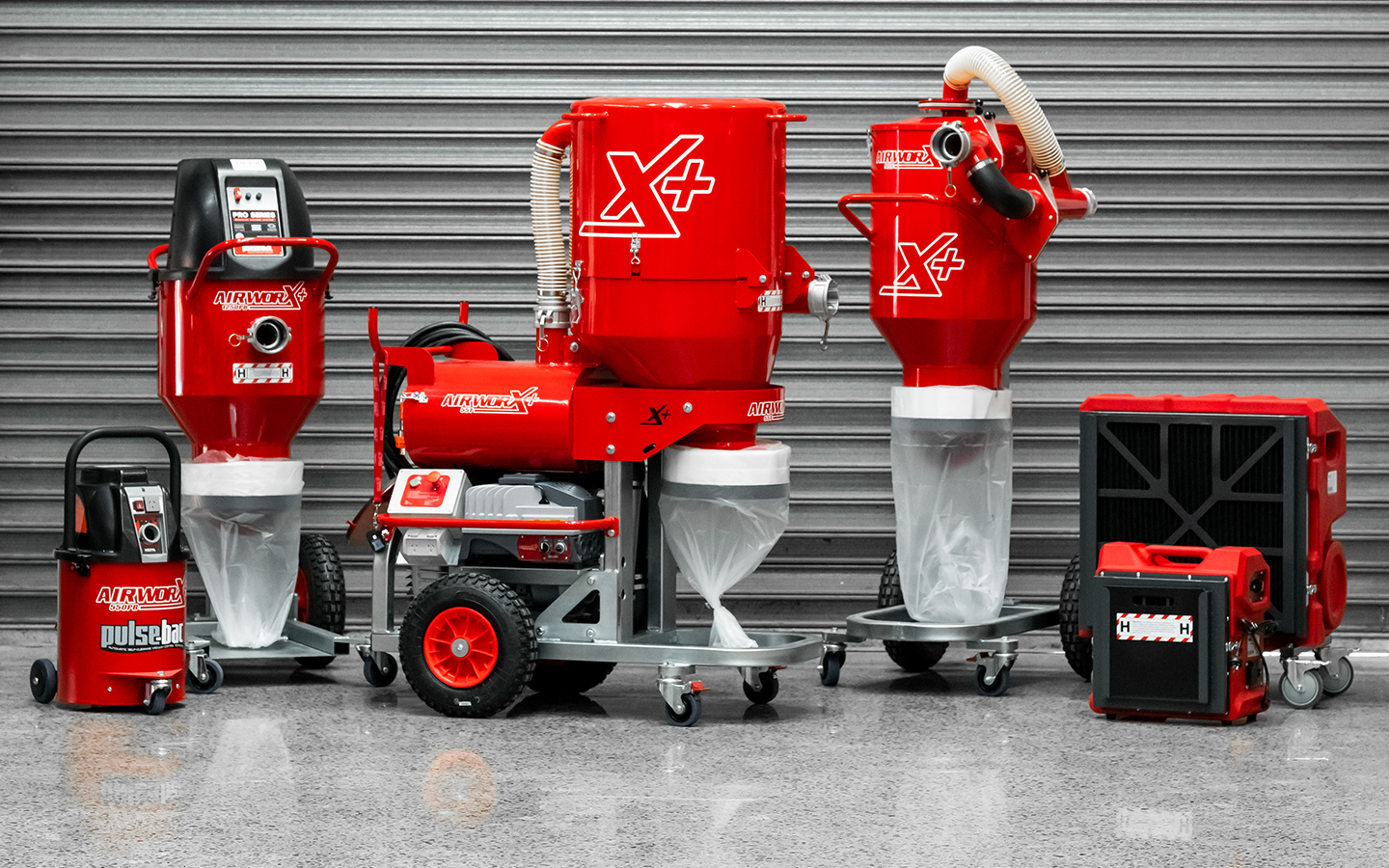
The best dust management systems follow the hierarchy of controls: eliminate or reduce dust generation where possible, capture dust at the source, prevent dust from spreading, clean the remaining air, and use respiratory protection as a final safeguard.
The most appropriate dust control method depends on the application. While wet methods are suitable for some tasks, dry dust extraction is often preferred for flooring and surface preparation because it avoids slurry, keeps worksites cleaner and leaves surfaces ready for subsequent coatings.
For dry grinding applications, effective dust management starts with containment at the source. Dust skirts for planetary grinders and hand grinder dust shrouds help prevent particles from escaping before they become airborne, improving the effectiveness of the entire extraction system.
The next layer is extraction itself. Selecting a system with sufficient airflow, filtration and dust capacity for the size of the job helps maintain consistent performance and minimise airborne dust. Portable extraction systems are well suited to hand grinding, edge work and smaller-scale applications, while larger commercial grinding operations typically require higher-capacity systems to keep pace with production. For example, the AIRWORX 550PB and AIRWORX 1250PB are designed for portable dust extraction, while the AIRWORX 55T is suited to higher-volume commercial applications.
Dust separation can further improve system performance. By removing a significant proportion of dust before it reaches the vacuum, pre-separators reduce filter loading, maintain airflow and help keep the extraction system operating closer to peak performance for longer. At the same time, contractors can change dust bags without shutting down the vacuum, reducing interruptions and maintaining productivity. The AIRWORX SCS Separator is designed to deliver these benefits by acting as a pre-separation stage within the dust management system.
Beyond the point of extraction, environmental controls also play a role. Air cleaners help filter airborne contaminants from the surrounding environment, supporting cleaner site conditions and improved air quality. The AIRWORX ATMOS 1000 and ATMOS 2000 provide this additional layer of air filtration.
Finally, respiratory protection remains an important safeguard for operators working in active grinding environments. While it sits at the final level of the hierarchy of controls, properly selected respiratory protection provides an important additional layer of defence when used alongside broader dust management strategies. The CleanSpace range is designed to complement these broader dust management systems.
Each component serves a different purpose, but the most effective dust management systems are those where every layer works together. Containment, extraction, environmental controls and respiratory protection all play a role in creating cleaner, safer and more productive worksites, but no dust management system is truly effective without skilled operators applying effective work methods.
A Smarter Approach to Dust Management
Effective dust management isn't about buying one product and hoping for the best.
It's about controlling dust as early as possible and making sure each part of your operation is working together effectively.
When that happens, sites stay cleaner, operators are better protected, equipment performs more effectively and jobs run more efficiently.
The contractors achieving the best results aren't focused on a single piece of equipment. They're focused on equipping their teams with the knowledge, systems and work practices needed to achieve effective dust control.
Because cleaner air and safer worksites are rarely the result of one thing. They're the result of getting a lot of small things right.
As WORX+ Director and Head of R&D Tim Van Der Veen puts it, "effective dust management is not a product decision. It's a systems decision."
If you need assistance with understanding the best approach to an effective dust management system, reach out to the WORX+ team, or book in a spot at an upcoming seminar to learn from industry experts who cover dust management in great detail which includes practical training.
Disclaimer: This article provides general information only and is not intended as legal, occupational health or regulatory advice. Businesses should refer to the relevant workplace health and safety authority in their jurisdiction and seek professional advice where appropriate to ensure compliance with applicable laws and workplace obligations.
WordsCharactersReading time